

ECG Interpretation for Student Paramedics and Ambulance Clinicians
ECG interpretation is a core clinical skill for paramedics and ambulance clinicians, and one of the most challenging areas of learning for student paramedics. Recognising rhythms, identifying pathology, and applying ECG findings to the patient in front of you requires structured learning, clinical context, and repeated exposure.
This hub brings together free ECG education, practical explanations, and clear learning pathways into deeper, structured ECG training.

ECG Hub Topics
ECG basics for student paramedics:
Understanding ECG paper & waves
Normal sinus rhythm explained
Introduction to 12-lead ECGs
Interpreting the whole thing
When 12-leads matter pre-hospital

Understanding the important abnormalities:
Tachycardia and Bradycardia
Atrial Fibrillation
Heart blocks explained simply
What is required:
What examiners look for in ECG interpretation
Common ECG mistakes on placement
Who the ECG Hub Is For
This ECG Hub is designed specifically for:
Student paramedics studying in the UK
Ambulance clinicians developing ECG confidence
Newly qualified paramedics consolidating rhythm recognition
Clinicians returning to ECG interpretation after time away
Whether you are encountering ECGs for the first time or looking to strengthen your foundations, this hub focuses on pre-hospital relevance, not cardiology theory for cardiologists.
Why ECG Interpretation Is Difficult for Student Paramedics
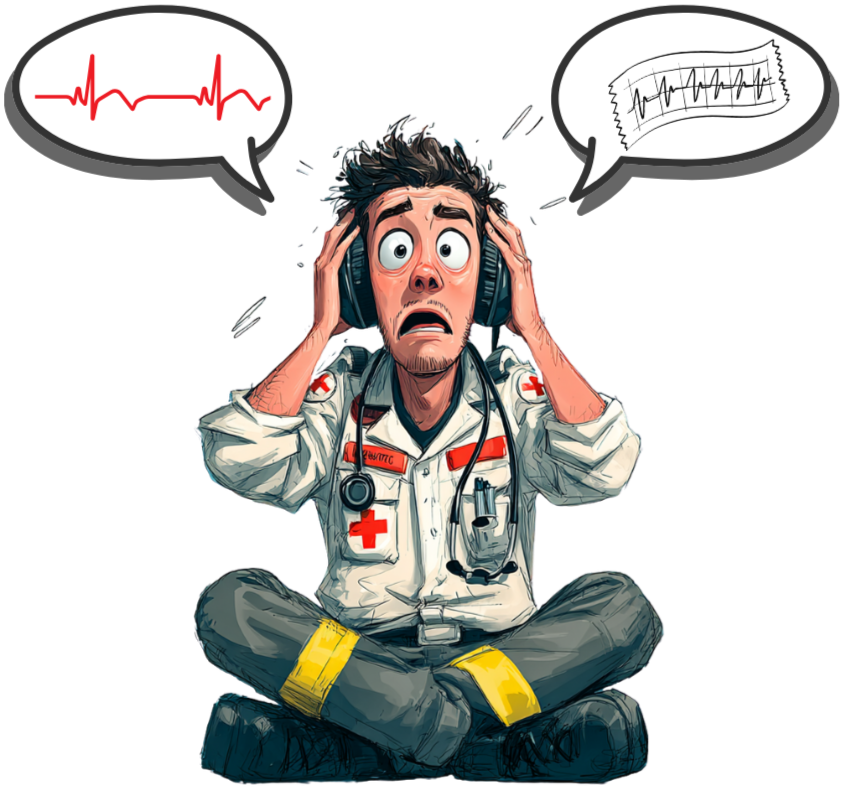
Many student paramedics struggle with ECG interpretation because learning often feels fragmented. ECGs are commonly taught as isolated rhythms rather than as part of a clinical assessment process.
Common challenges include:
Difficulty recognising normal versus abnormal rhythms
Uncertainty about what findings actually matter in ambulance care
Anxiety during OSCEs and on placement
Lack of structured frameworks to fall back on
This hub focuses on understanding before memorisation, helping learners build confidence rather than fear.
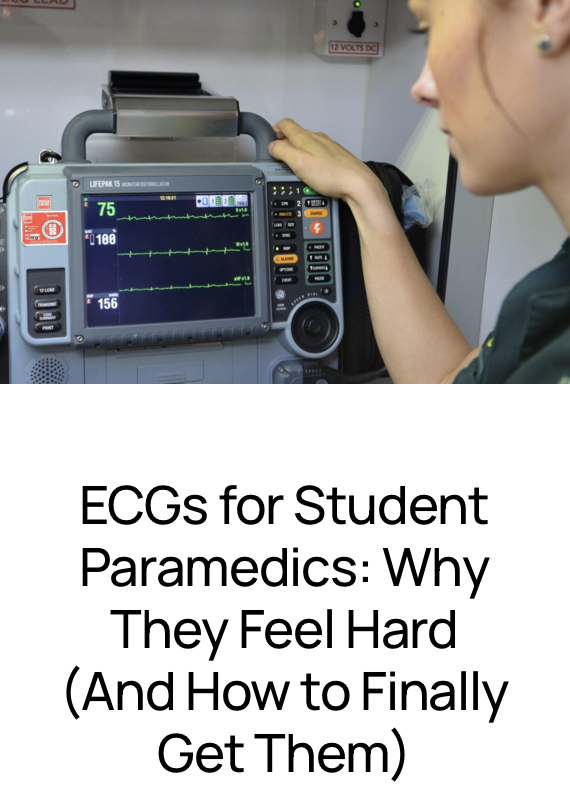
What You’ll Learn in the PocketClinician ECG Hub
The ECG Hub provides free educational content that supports learning without replacing structured training or paid resources.
What an ECG represents in simple, practical terms
ECG paper speed, calibration, and lead basics
Understanding waves, intervals, and complexes
Core ECG Principles
Rhythm Recognition in Pre-Hospital Care
What “normal” actually looks like on an ECG
Broad recognition of common rhythms encountered by ambulance clinicians
Understanding rhythm categories without diagnostic overload
Introduction to 12-Lead ECG Interpretation
Why 12-lead ECGs matter in paramedic practice
How pre-hospital ECGs influence clinical decision-making
Conceptual understanding without localisation rules
Clinical Relevance for Placement and OSCEs
How ECGs are assessed in paramedic OSCEs
Common mistakes students make with ECG stations
How examiners think about ECG interpretation

What the ECG Hub does, and does not, teach
The ECG Hub is designed to build confidence and understanding, not instant mastery.
Understand ECG concepts clearly
Recognise when an ECG is normal or concerning
Feel more confident on placement
Reduce anxiety around ECG interpretation
The ECG Hub Helps You:

The ECG Hub Does Not Replace:
Structured ECG interpretation frameworks
Exam-ready rhythm breakdowns
Full 12-lead localisation teaching
Repetition-based learning

Those skills are developed through PocketClinician pocketbooks, teaching sessions, and our ECG learning community.
Progressing Beyond the ECG Hub

The ECG Hub acts as the starting point in your ECG learning journey.
Once learners are comfortable with the foundations, they typically progress into:
Structured ECG interpretation frameworks
Rhythm-by-rhythm learning
Exam and OSCE preparation
Repeated ECG exposure to build pattern recognition
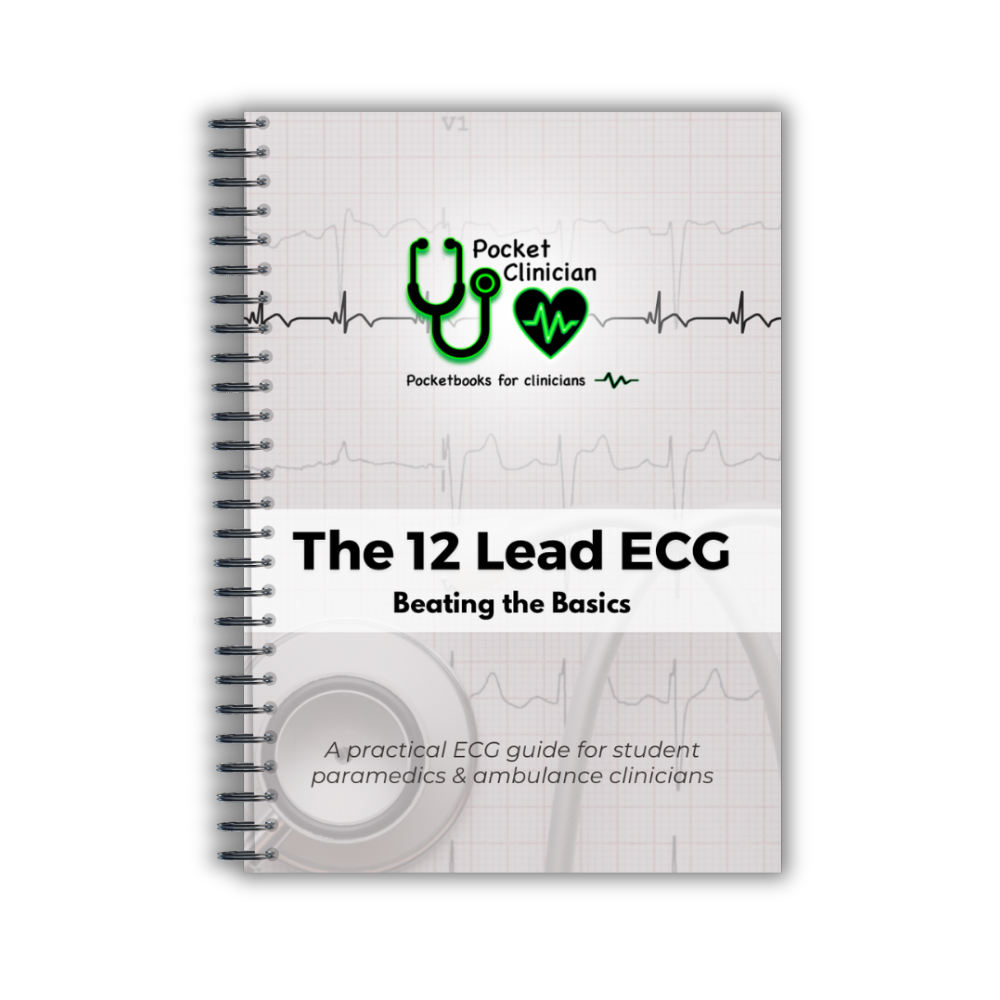
The ECG pocketbook: Beating the Basics is a great resource for learning all the rhythms, blocks, ischaemic changes and abnormalities that every paramedic will need to know on the road.
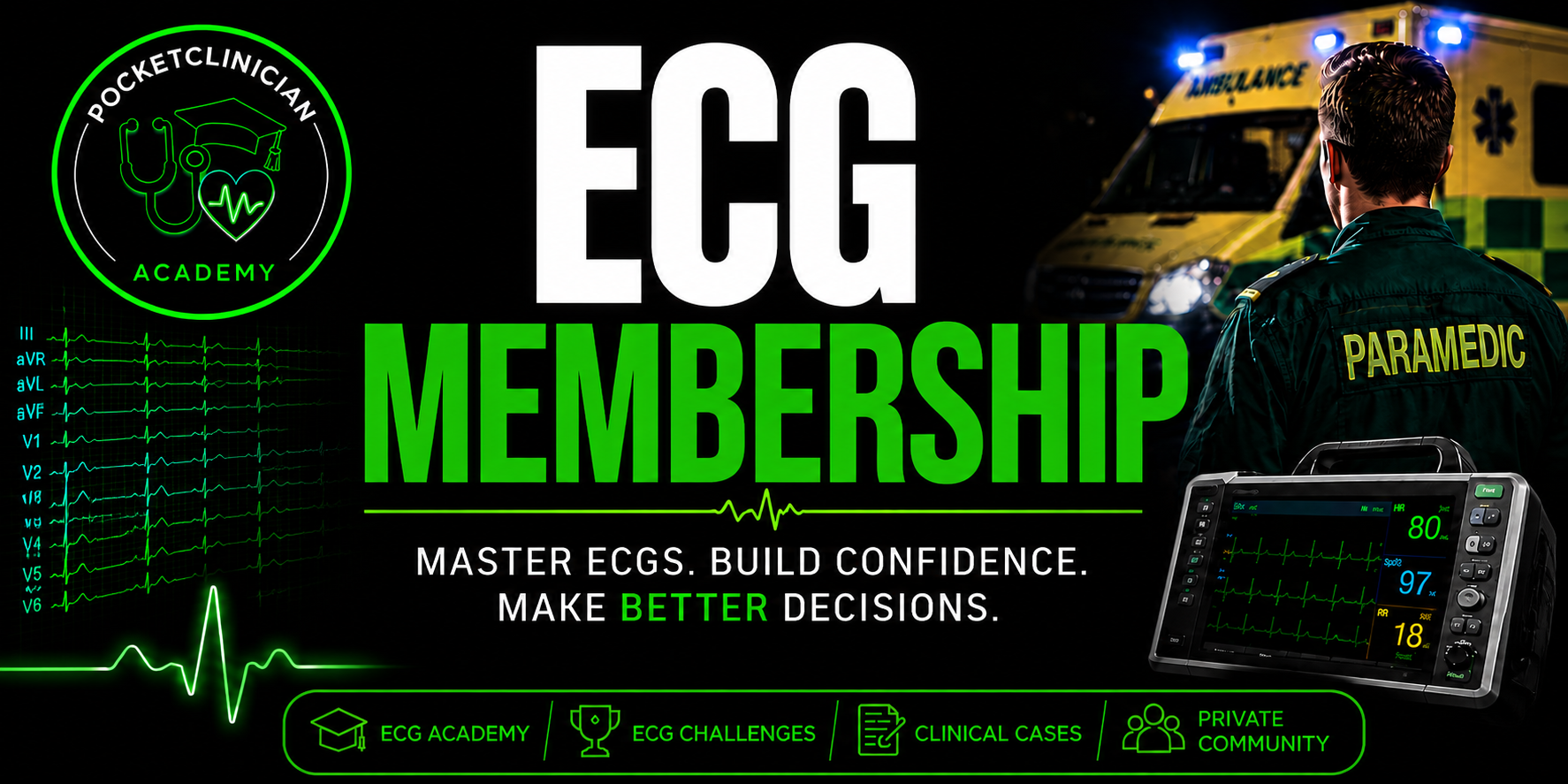
The ECG Membership includes the full ECG Academy, monthly challenges to test your interpretation and regular clinical cases to link ECGs to the clinical context of a patient.
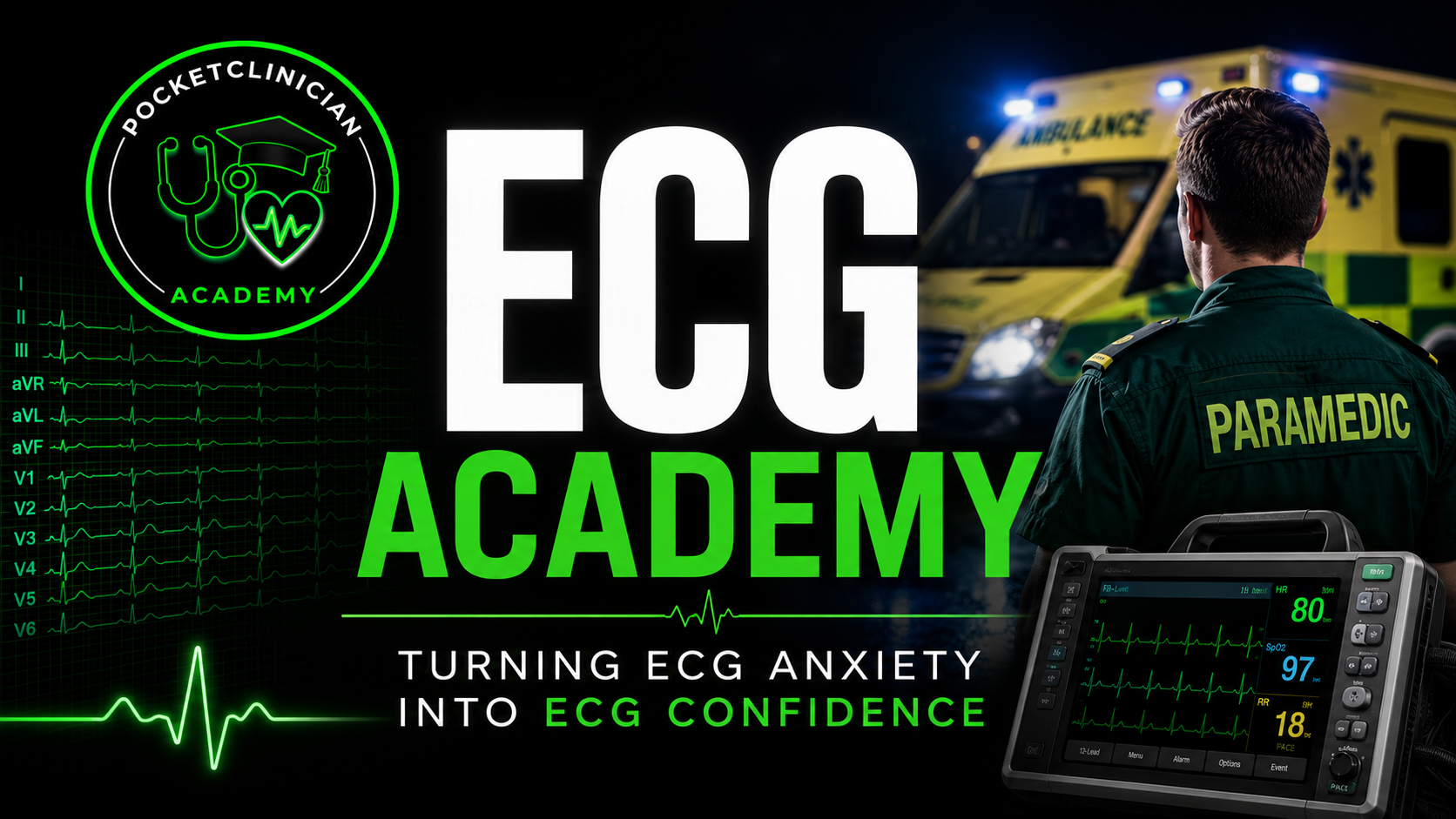
The ECG Academy contains over 30 ECG video lessons, over 100 quiz questions and CPD certificates. Starting at the foundations and going through advanced ECG interpretation.
How to Use This ECG Hub Effectively

1. Start with the ECG basics page

2. Focus on understanding rather than memorisation


4. Progress into structured ECG learning when ready
3. Revisit topics multiple times
ECG interpretation is not about talent. It is about exposure, structure, and confidence.

Supporting Student Paramedics in Real-World Practice
PocketClinician exists to support real student paramedics, in real ambulance settings, dealing with real patients. This ECG Hub reflects how ECGs are actually used in pre-hospital care — not how they are taught in isolation.
If you are a student paramedic or ambulance clinician looking to improve ECG confidence, this hub is the place to start.