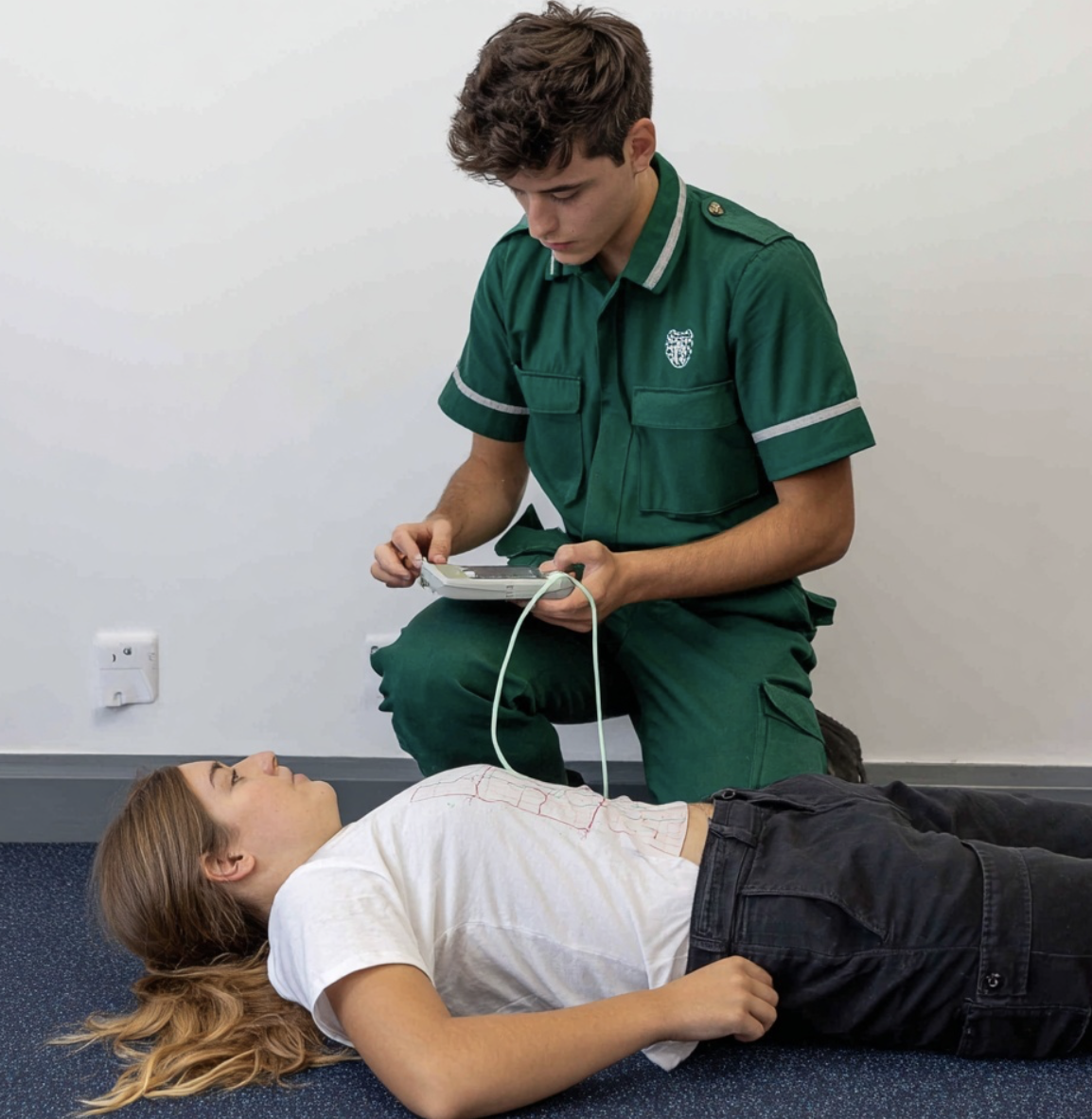
12 Lead ECG
OSCEs and Placement
If you’re a student paramedic, ECG interpretation is something you will be assessed on repeatedly both in OSCEs and on ambulance placement.
However, what is expected of you in an OSCE is very different to what is expected of you on placement.
Understanding that difference is what separates students who just pass from those who stand out as clinically competent.
This guide breaks down exactly how to approach ECGs in both settings, what examiners and mentors are actually looking for, and how to avoid the common mistakes that cost students marks and confidence.
ECG Interpretation in OSCEs
What you need to understand first
In an OSCE, you are not being tested on whether you can interpret the most complex ECG.
You are being tested on whether you can:
Demonstrate a clear, structured approach
Verbalise your clinical reasoning
Identify key abnormalities
Communicate safely and logically
Most ECGs in OSCEs will be:
Normal sinus rhythm
A clearly abnormal rhythm
A classic STEMI pattern
You are unlikely to be given something deliberately obscure or highly complex.
If you approach it like you’re trying to “spot something clever,” you will often overcomplicate it.
Instead, your focus should be on process over perfection.