

Student Paramedic Resources for Placement & Clinical Practice
Practical paramedic education covering ECG interpretation, patient assessment, history taking, OSCE preparation and more. Designed to build confidence in real pre-hospital practice.

MOST POPULAR THIS MONTH
ECG Membership
£6.99 per month
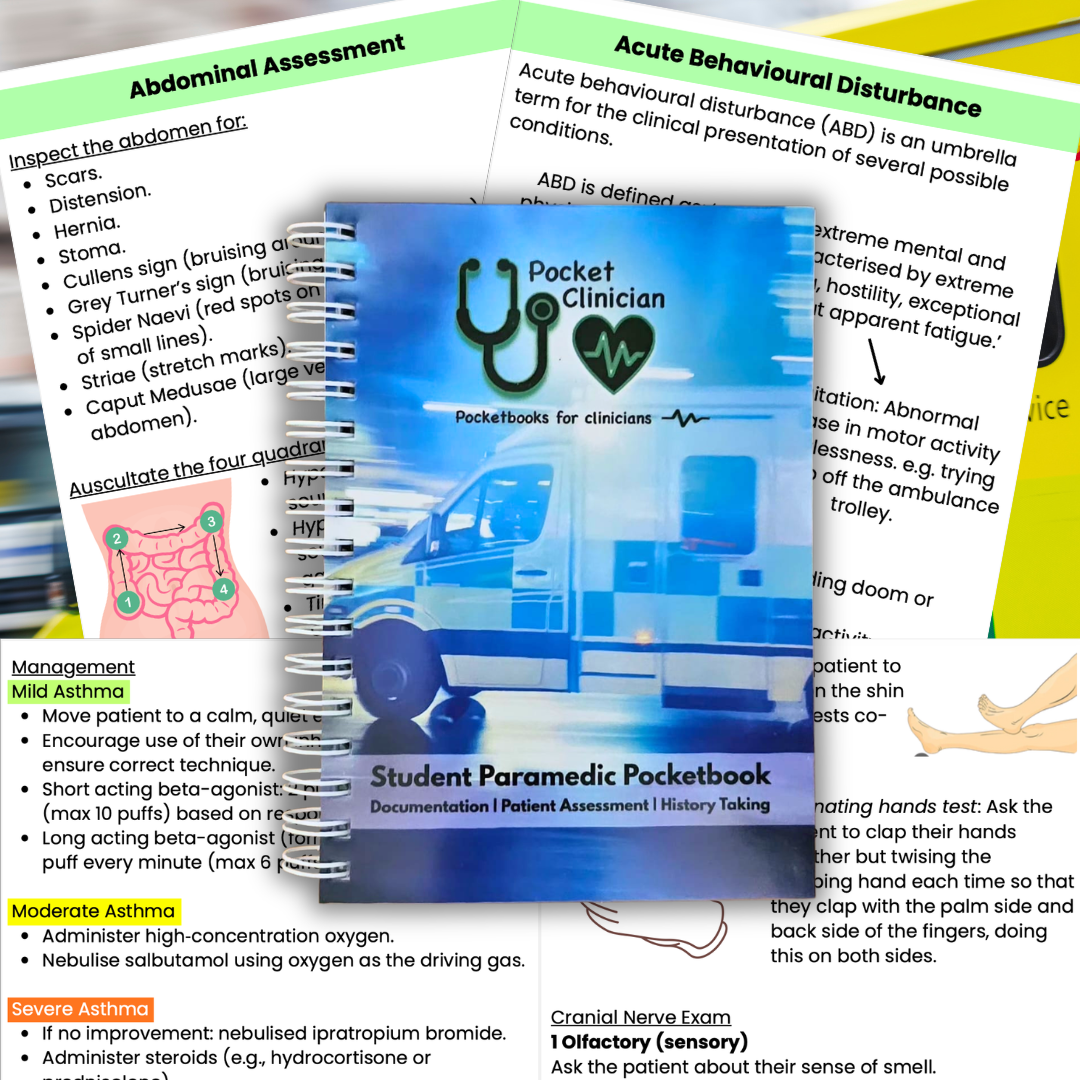
Student Paramedic Pocketbook
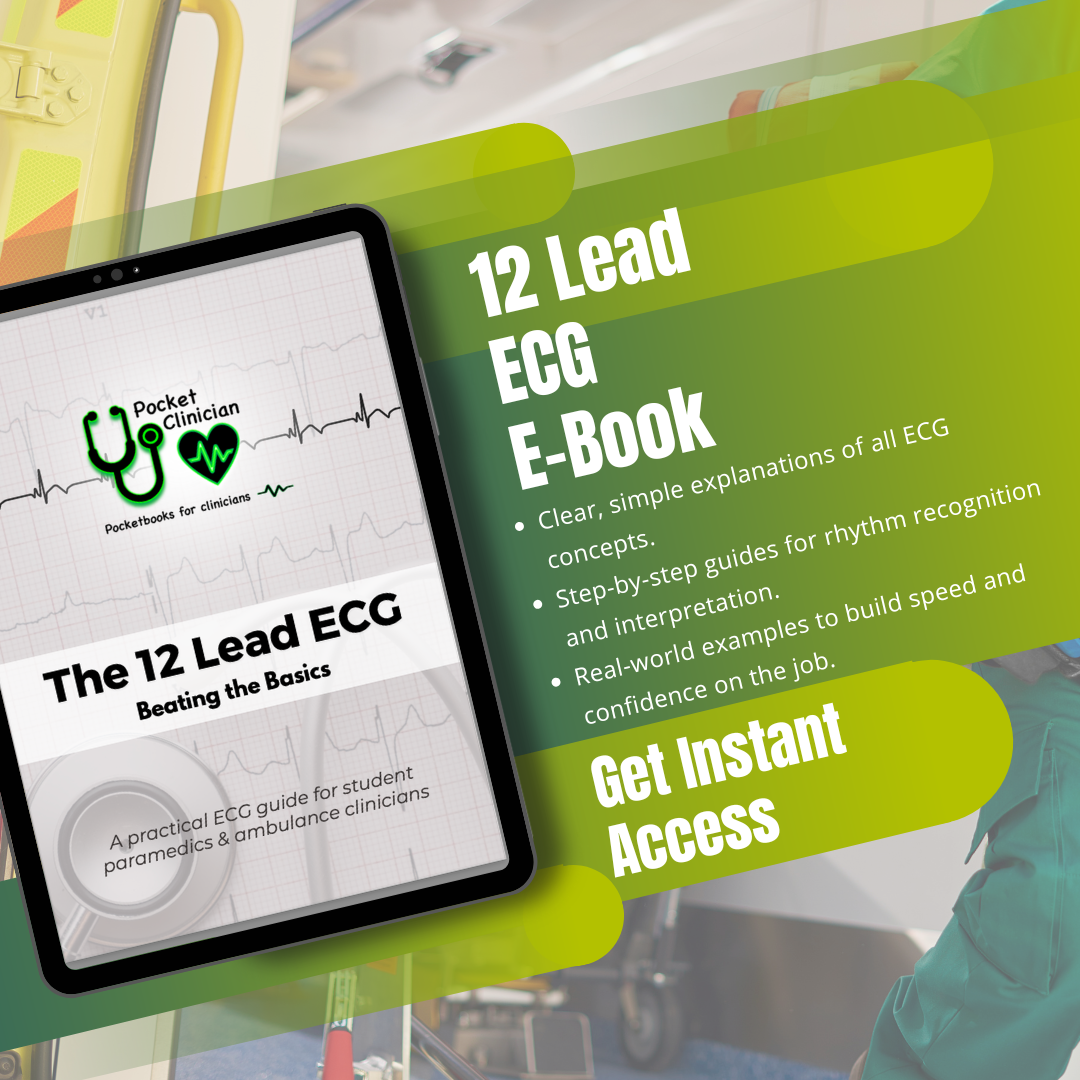
12 Lead ECG E-Book
£20.00
£18.99
Stop Guessing. Start interpreting ECGs with confidence.
The ECG Membership gives student paramedics and ambulance clinicians a simple way to actually get better at ECG interpretation, not just learn criteria and hope you remember them.
FREE 48 HOUR TRIAL UPON SIGNING UP.
01 Learn
Build your ECG knowledge step-by-step with full access to the ECG Academy.
Put that knowledge to the test with new ECG Challenges designed to sharpen your interpretation skills.
02 Practice
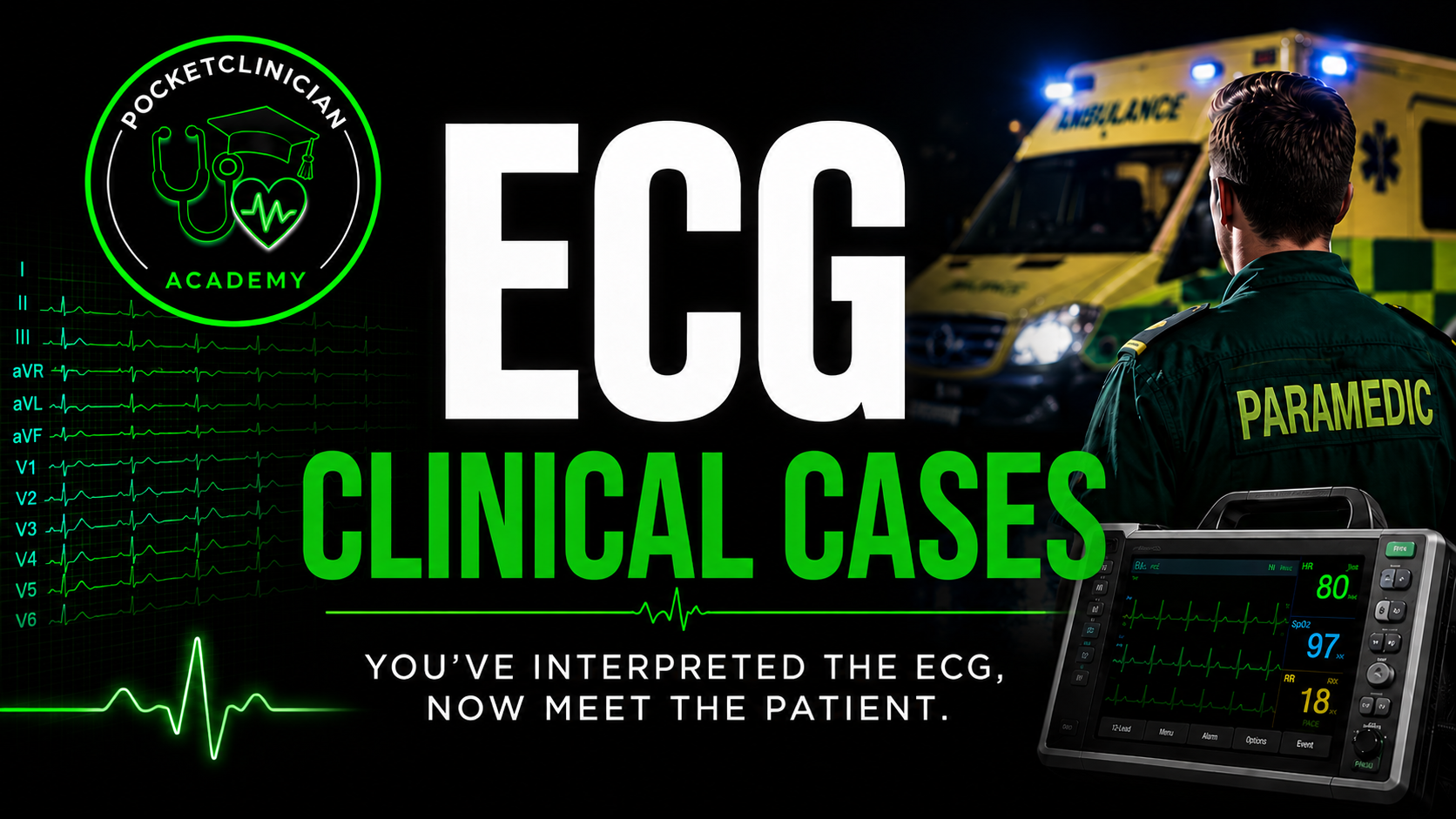
Take it into practice with realistic clinical cases that connect the ECG to the patient in front of you.
03 Apply
One Membership. Three ways to build ECG confidence.
Look Inside the Membership
An Example From The Academy
PocketClinician is built specifically for student paramedics in the UK, focusing on the skills that actually matter on placement and in OSCEs.
From patient assessment and history taking to ECG interpretation and clinical decision-making, our resources are designed to reflect real ambulance practice, not just theory.
Whether you're preparing for your next shift, revising for exams, or building confidence on placement, PocketClinician helps you develop structured, repeatable approaches to patient care in the pre-hospital environment.

Education Designed for Pre-Hospital Care
All PocketClinician education is:


Written specifically for student paramedics and ambulance clinicians
Focused on pre-hospital patient assessment


Aligned with UK ambulance practice and expectations
Structured to support clinical reasoning, not rote learning
Pocketbooks for Ambulance Placement and Clinical Assessments
PocketClinician pocketbooks are designed to be used alongside placement and revision, providing clear frameworks for common challenges faced by student paramedics.
These are concise, practical guides written with ambulance practice in mind, supporting consistent and defensible clinical decision-making.
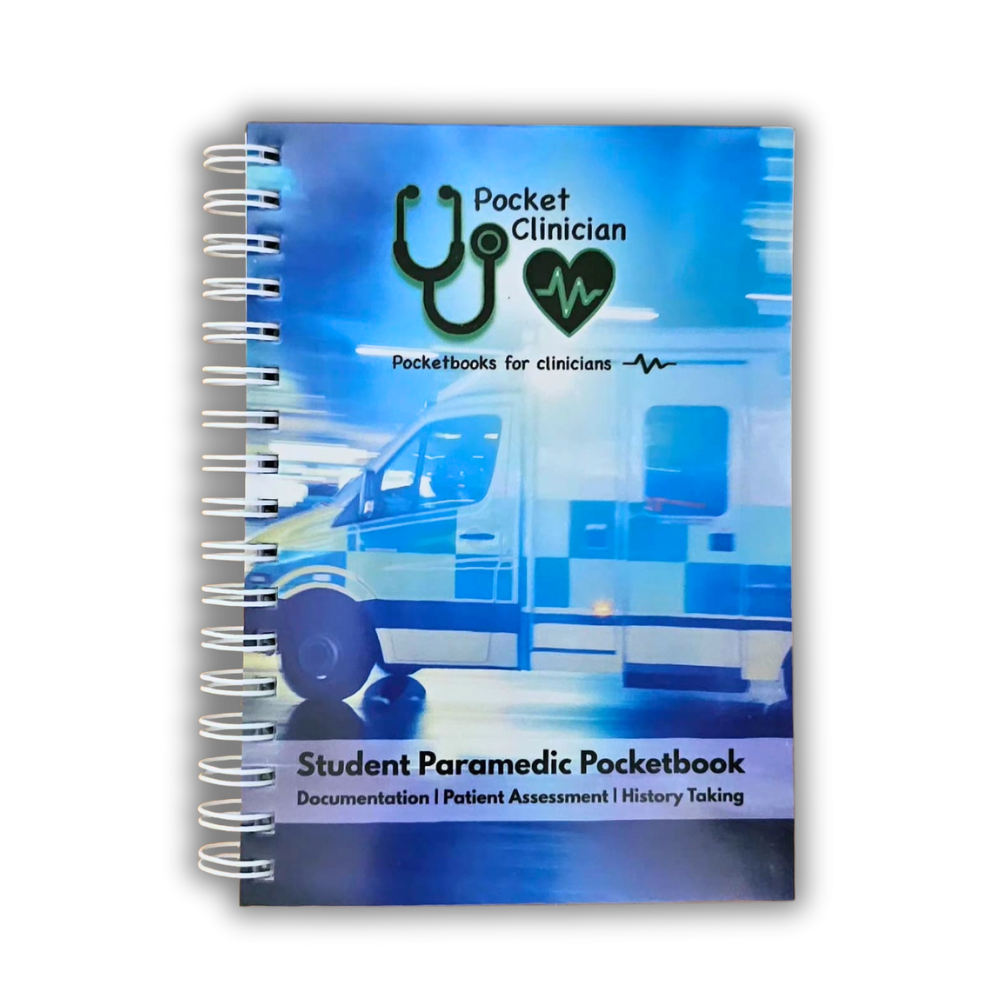
A practical guide for student paramedics on placement, covering patient assessment, history taking and paramedic documentation.
Built to help you know exactly what to ask and do on shift, without second-guessing yourself.
Student Paramedic Pocketbook for Patient Assessment, OSCEs and Ambulance Placement
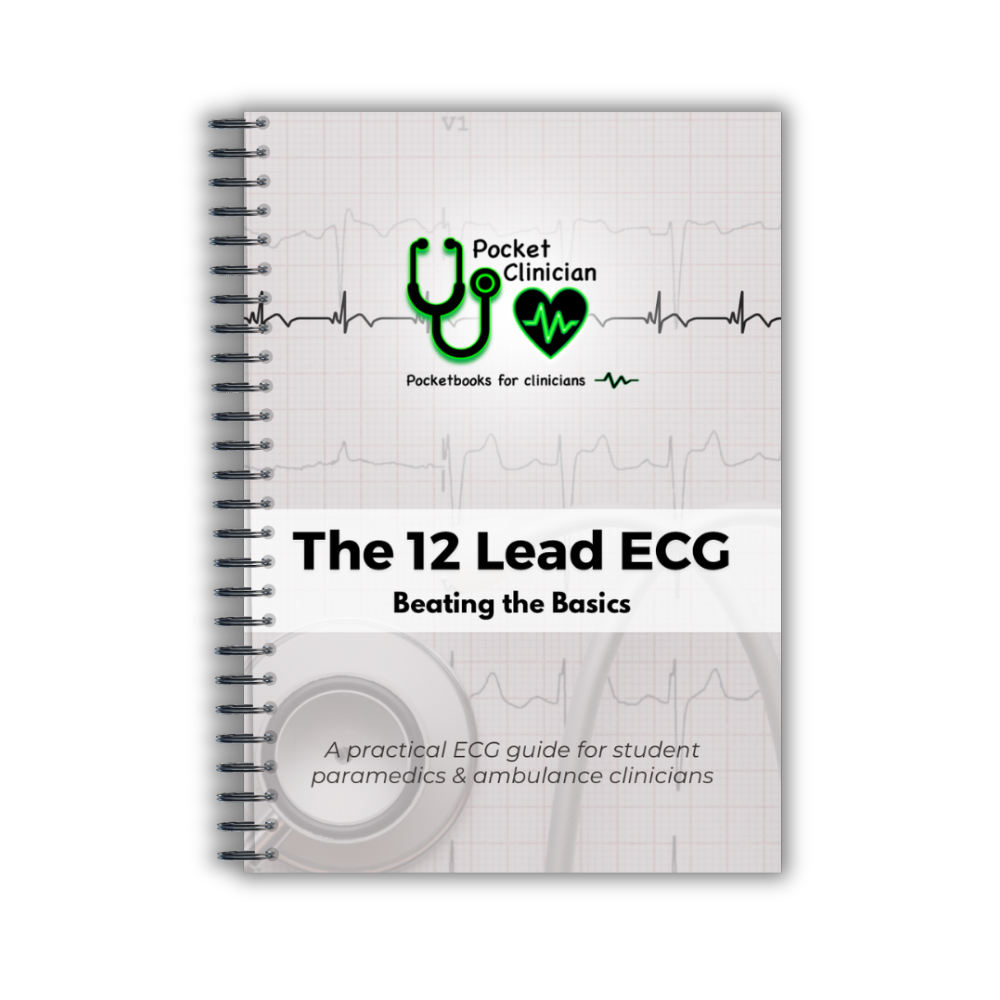
ECG Pocketbook for 12 Lead ECG Interpretation and Ambulance Clinicians
A clear, practical guide to 12 lead ECG interpretation for paramedics, covering rhythms, blocks and STEMI recognition.
Designed to take you from ECG confusion to ECG confidence on placement.
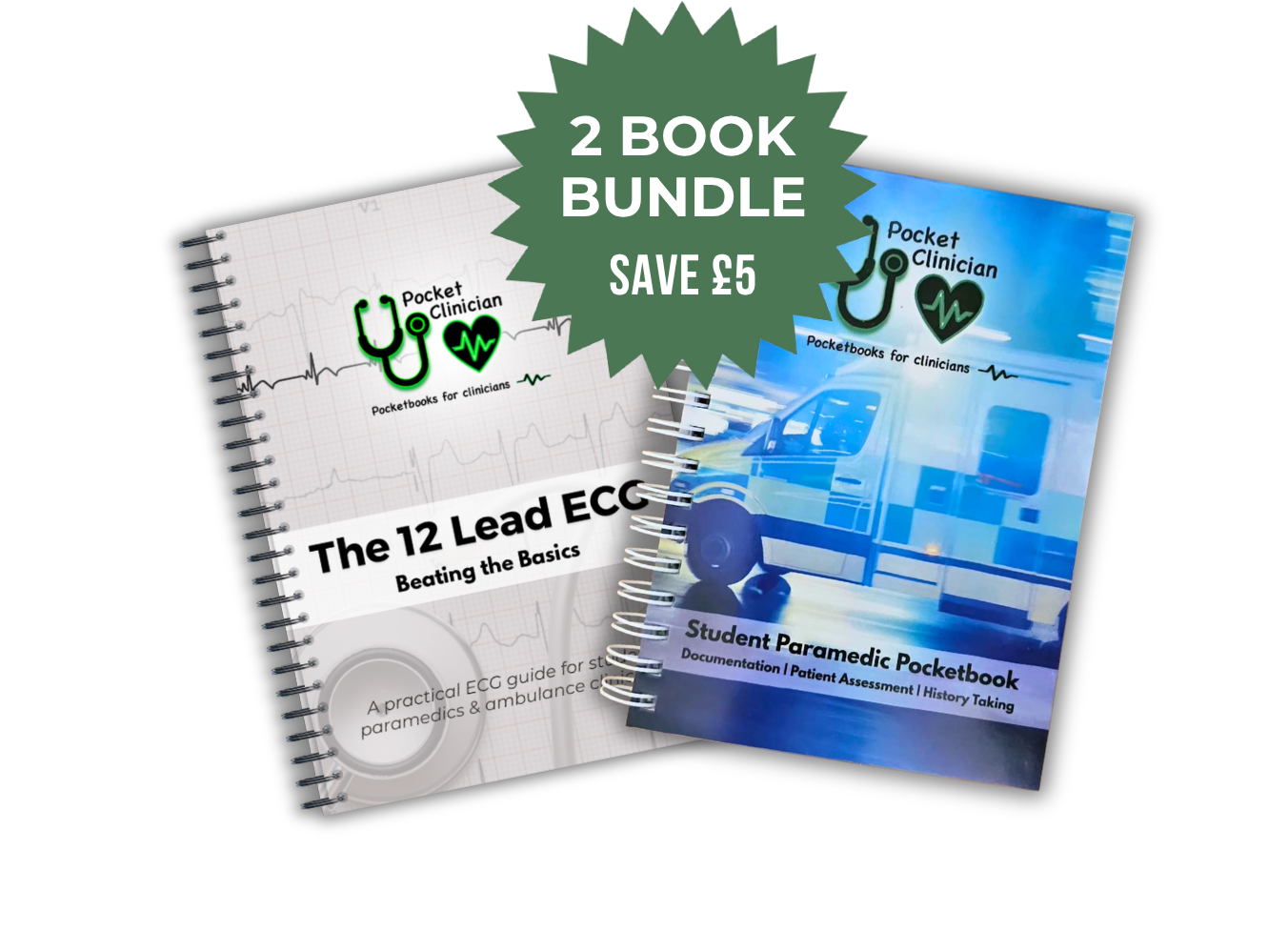
Everything you need as a student paramedic on placement, combining patient assessment, documentation and ECG interpretation into one complete system.
Designed to help you feel prepared, confident and in control on shift, not overwhelmed.
Student Paramedic Bundle for Placement, OSCEs and ECG Confidence. Best of both worlds!

“An easy to read guide while on the job. Full of useful reminders and images. Great quality print thats worth the money paid. Recommended.”
Free ECG Interpretation for Student Paramedics & Ambulance Clinicians
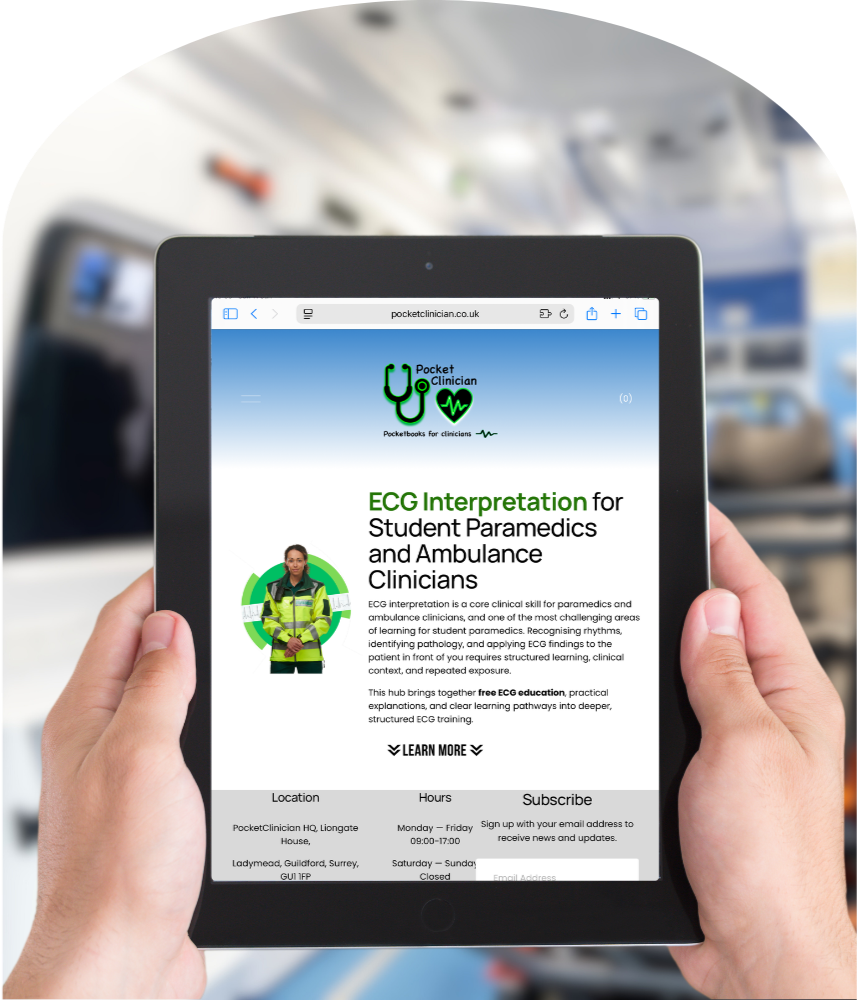
ECG interpretation is a core skill for ambulance clinicians and a common challenge for student paramedics. Understanding rhythms, recognising pathology, and applying ECG findings to patient presentation requires structured learning and repeated exposure.
PocketClinician provides ECG education that supports:
Core ECG principles
Rhythm recognition in pre-hospital care
Introduction to 12-lead ECG interpretation
Clinical relevance for OSCEs and placement
The ECG Hub brings together free educational content alongside structured pathways into deeper learning through pocketbooks, teaching sessions, and a dedicated ECG community.
Student Paramedic Resources for Placement, OSCEs and Qualification
PocketClinician offers a growing range of paramedic education resources, supporting students from first placement through to qualification.
These include:
Student paramedic pocketbooks
Patient assessment and history-taking guides
ECG interpretation resources
OSCE and placement preparation tools
Blogs and clinical learning guides
Each resource is designed to support safe, structured, and confident practice in the ambulance setting.
Blogs and Learning Guides for Paramedic Education
PocketClinician publishes educational blogs and guides covering key areas of pre-hospital care and paramedic education.
Topics include:
Patient assessment in the ambulance setting
History taking frameworks for student paramedics
ECG interpretation fundamentals
OSCE preparation strategies
Common documentation pitfalls
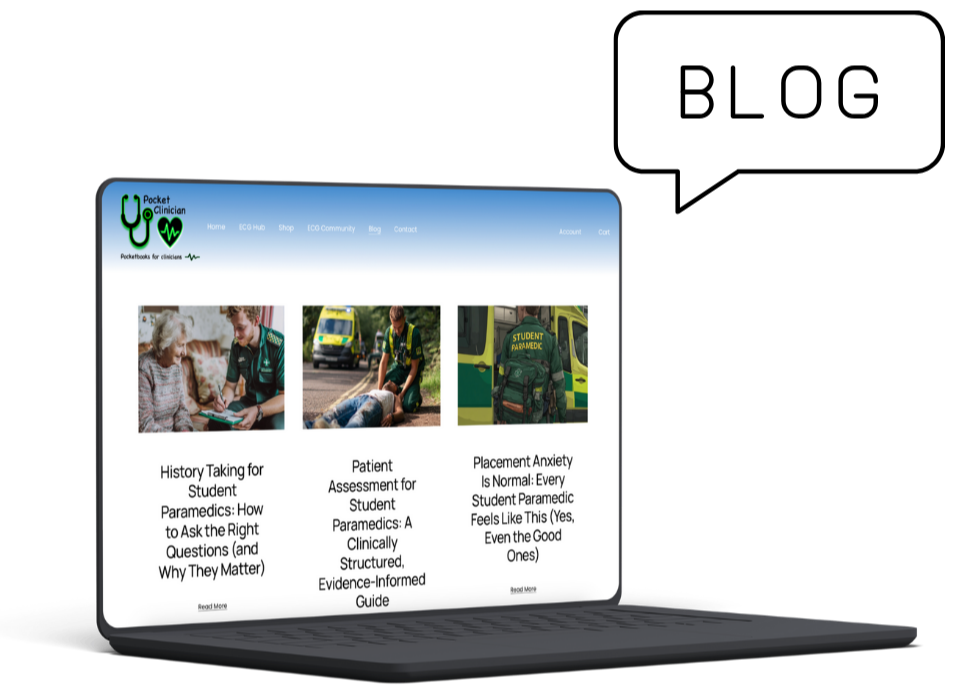
Learn more in our student paramedic blog covering ECGs, OSCEs and ambulance placement tips
A Trusted Approach to Paramedic Education
PocketClinician focuses on clarity, relevance, and practical application. Resources are designed to support students in developing structured clinical thinking, confidence on placement, safer patient assessment, and professional documentation standards.
Education is written from the perspective of real ambulance practice, supporting student paramedics as they transition from theory into clinical environments.

Student Paramedic Resources for Placement, OSCEs and ECG Learning
Patient Assessment for Student Paramedics
Student paramedics in the UK need more than theory to succeed on placement. Developing confidence in patient assessment, history taking and clinical decision making is essential when working in real ambulance environments.
ECG Interpretation for Ambulance Clinicians
PocketClinician provides practical resources designed to support ambulance placement, OSCE preparation and pre-hospital care, helping students build structured approaches they can rely on under pressure.
OSCE Preparation for Paramedic Students
From learning 12 lead ECG interpretation to improving documentation and handovers, our resources are designed to bridge the gap between university learning and real-world paramedic practice.
This is why thousands of student paramedics use PocketClinician to prepare for real ambulance practice.
You Ask… PocketClinician Answers…
-
The best learning resources for student paramedics combine clinical knowledge with practical tools that can be used on placement. PocketClinician creates paramedic-specific resources covering patient assessment, history taking, ECG interpretation, clinical reasoning, documentation, OSCE preparation and ambulance placement. Resources include pocketbooks, downloadable guides and online learning designed to help students turn university knowledge into confident pre-hospital practice.
-
Preparing for your first ambulance placement should focus on having a structured approach to patient assessment, history taking, communication, documentation and clinical handover rather than trying to memorise everything before your first shift. PocketClinician provides practical resources specifically designed to help student paramedics prepare for placement, build confidence and develop the skills they will use when assessing real patients.
-
The best way to learn ECG interpretation is to combine structured teaching with regular ECG practice and realistic clinical cases. Learning criteria alone can make it difficult to confidently interpret a 12-lead ECG when faced with a real patient. PocketClinician uses a Learn → Practice → Apply approach, helping student paramedics and ambulance clinicians build ECG knowledge, practise interpretation and apply their findings to realistic pre-hospital presentations.
-
Yes. The PocketClinician ECG Academy is an online ECG interpretation course designed specifically for student paramedics, paramedics and ambulance clinicians. It covers ECG fundamentals, systematic interpretation, cardiac rhythms, AV and bundle branch blocks, myocardial ischaemia and more through 30+ video lessons, downloadable learning resources, 100+ questions and CPD certificates. Full access to the ECG Academy is also included within the PocketClinician ECG Membership.
-
The PocketClinician ECG Membership is an ongoing ECG learning system for student paramedics, paramedics and ambulance clinicians. Members receive full access to the ECG Academy alongside regular ECG interpretation challenges and realistic clinical cases. The membership follows a Learn → Practice → Apply approach, helping clinicians continually develop their ECG knowledge, practise interpretation and apply it to real-world pre-hospital patient presentations.
-
Student paramedics can improve history taking and patient assessment by developing a consistent structure while learning to adapt their questioning and examination to the individual patient. Rather than simply memorising acronyms or asking every possible question, focus on gathering information that influences your clinical reasoning, identifies red flags and helps you make appropriate clinical decisions. PocketClinician resources are designed to help students develop this structured but clinically focused approach to patient assessment.
-
Effective OSCE preparation should combine clinical knowledge with repeated practice using structured patient assessment and realistic scenarios. PocketClinician provides student paramedic resources covering patient assessment, history taking, clinical reasoning, ECG interpretation and other skills commonly required during university simulation and OSCE assessments. The aim is not simply to memorise an OSCE script, but to understand the assessment well enough to adapt it confidently to different patient presentations.
-
Yes. Although many PocketClinician resources are designed with student paramedics in mind, the clinical education is also suitable for qualified paramedics and other pre-hospital ambulance clinicians looking to refresh or develop their knowledge. Resources such as the ECG Academy, ECG Membership and clinical education content are designed around practical pre-hospital application rather than university study alone.
-
Yes. PocketClinician is a UK-based paramedic education platform focused on practical learning for student paramedics, paramedics and ambulance clinicians. Resources are created with pre-hospital practice in mind and cover areas such as patient assessment, history taking, ECG interpretation, clinical reasoning, documentation, handover, OSCE preparation and ambulance placement.
-
PocketClinician's educational content is created by Tommy Knight, a UK registered paramedic and paramedic educator with experience supporting and teaching student paramedics. PocketClinician has also delivered educational sessions to paramedic societies at UK universities, with a focus on translating clinical knowledge into practical skills that can be used during ambulance placement and pre-hospital practice.