 Image 1 of 2
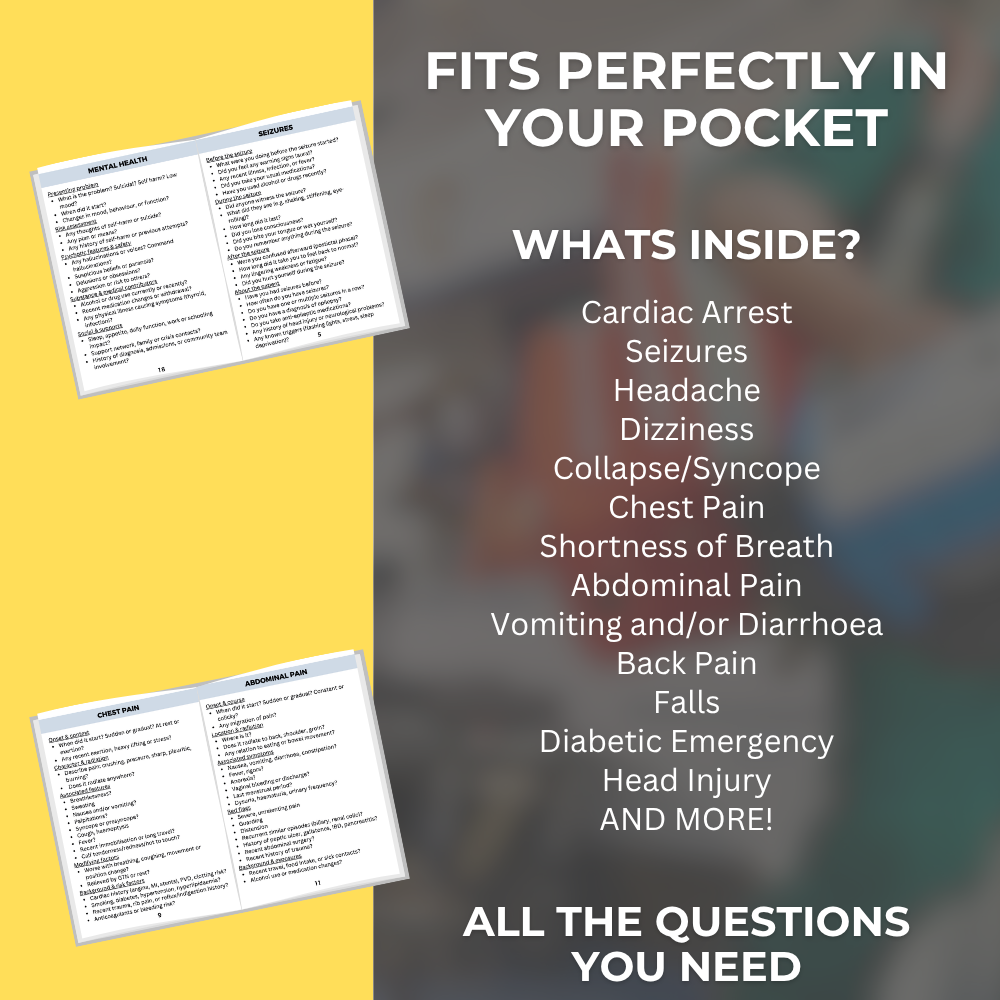 Image 2 of 2
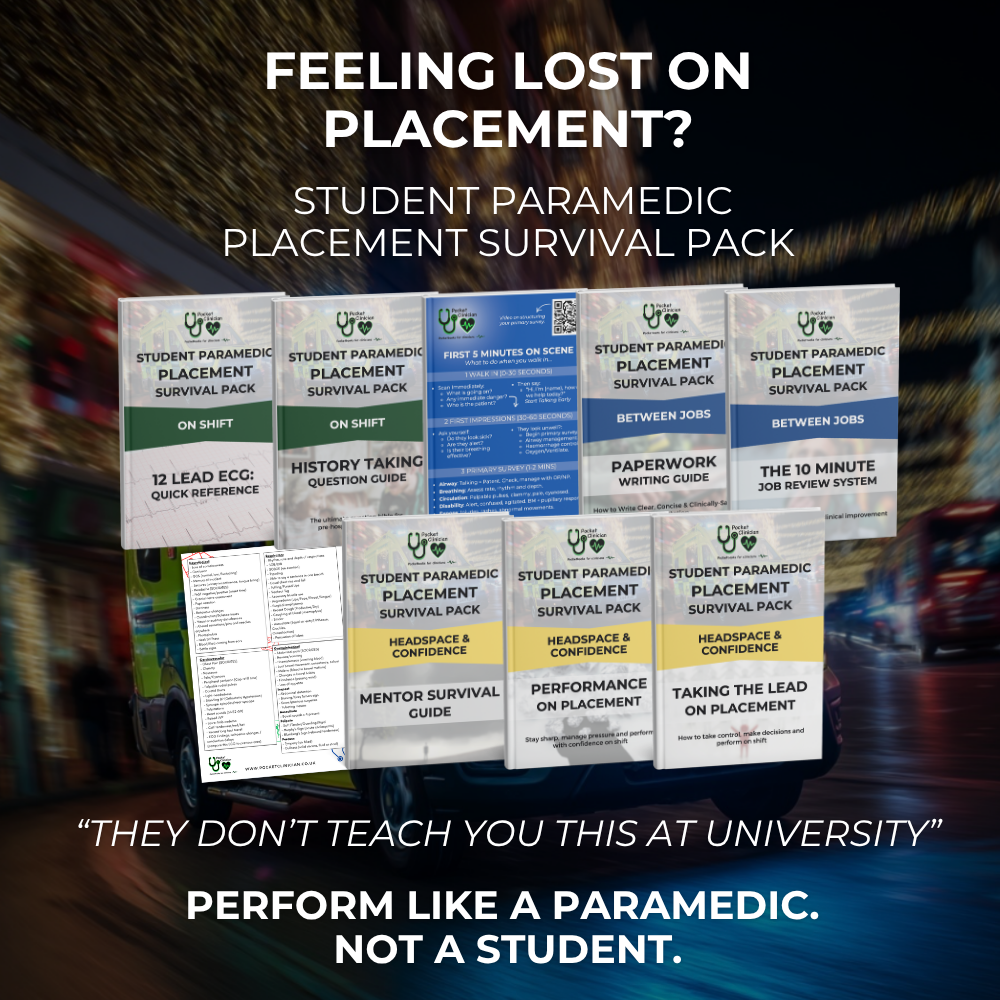
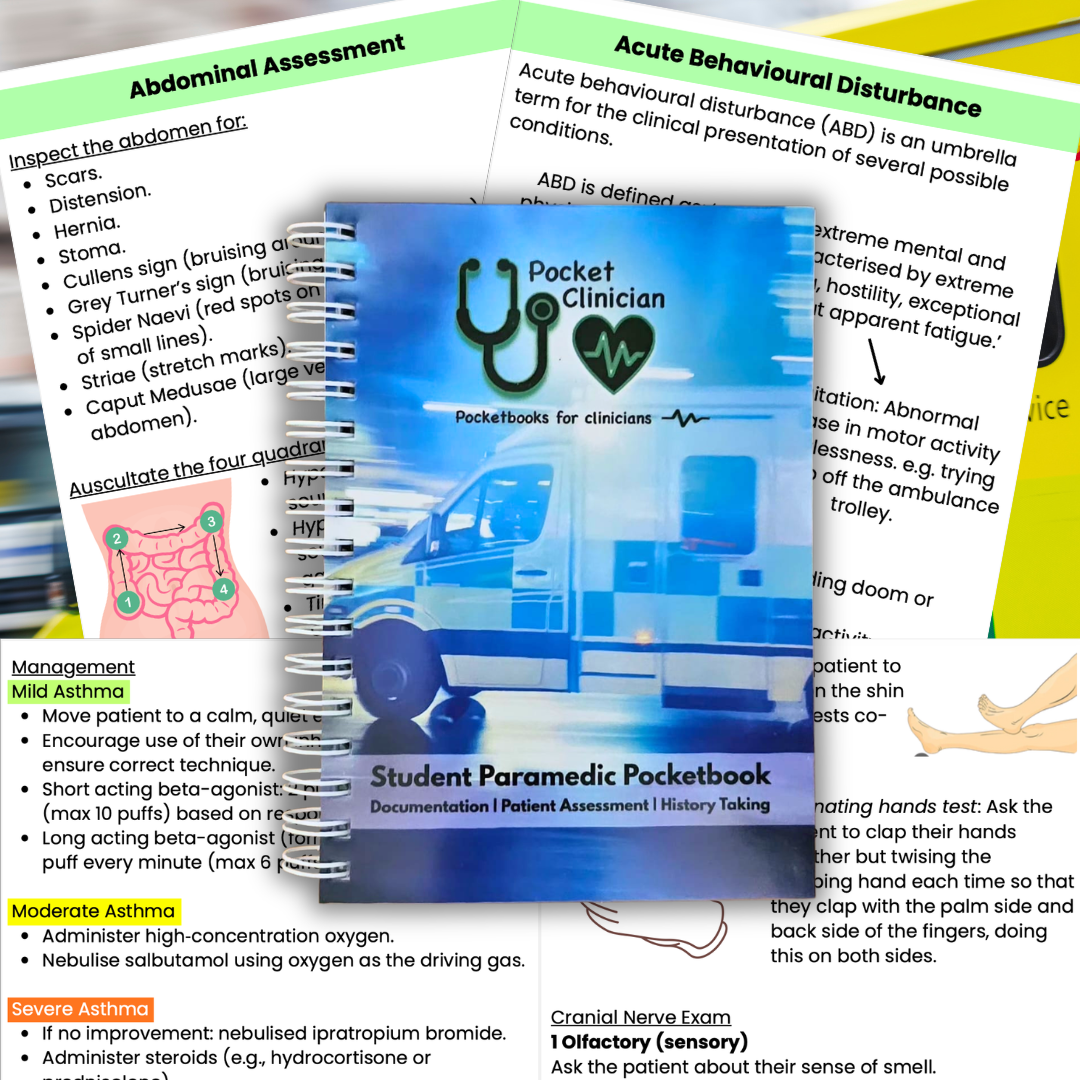
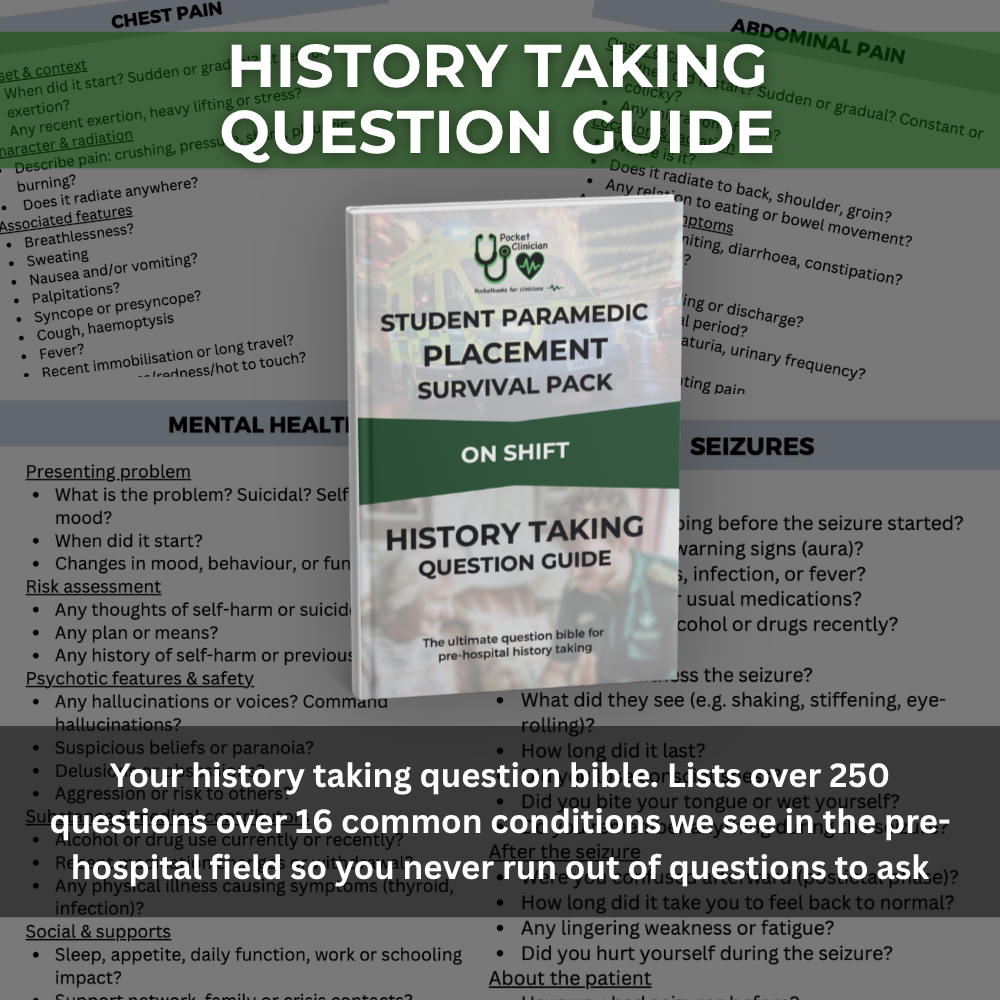
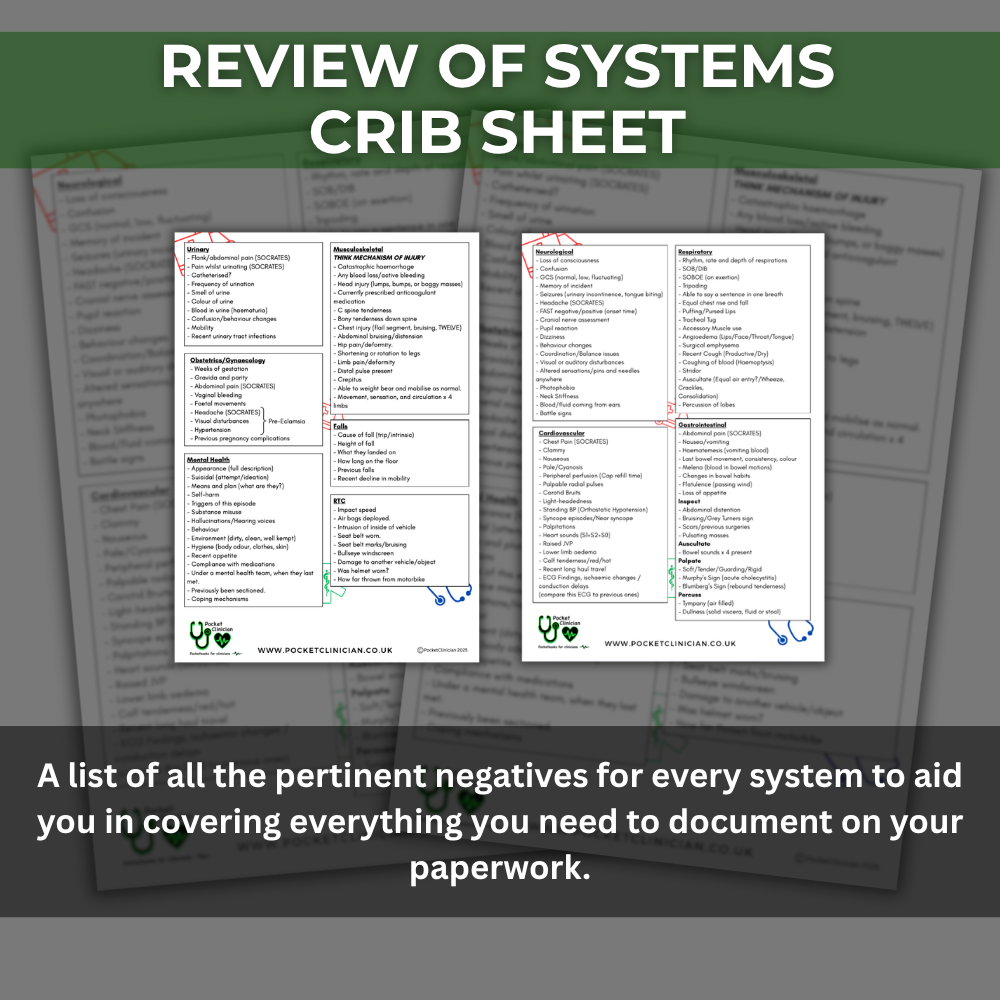
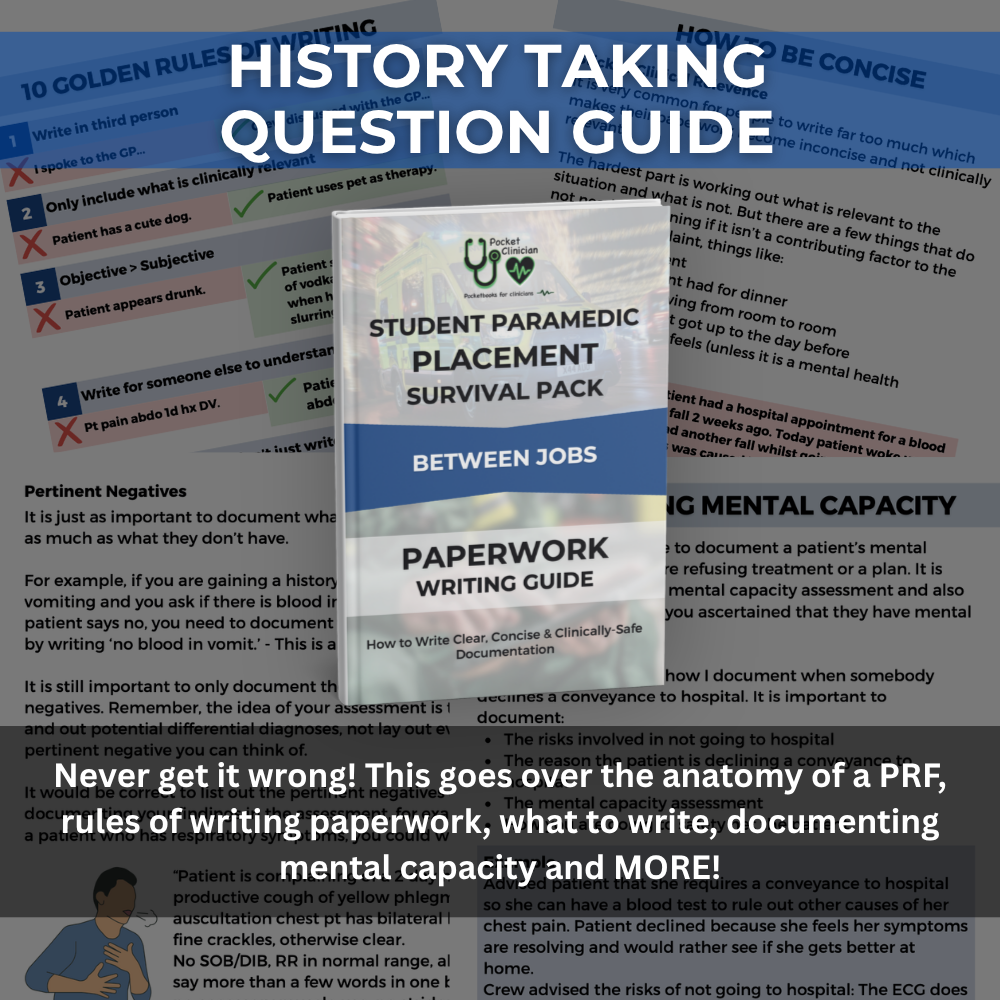
Improve your patient assessments and build confidence on ambulance placement with the PocketClinician History Taking Question Guide. A pocket-sized A6 booklet designed specifically for UK student paramedics and ambulance clinicians.
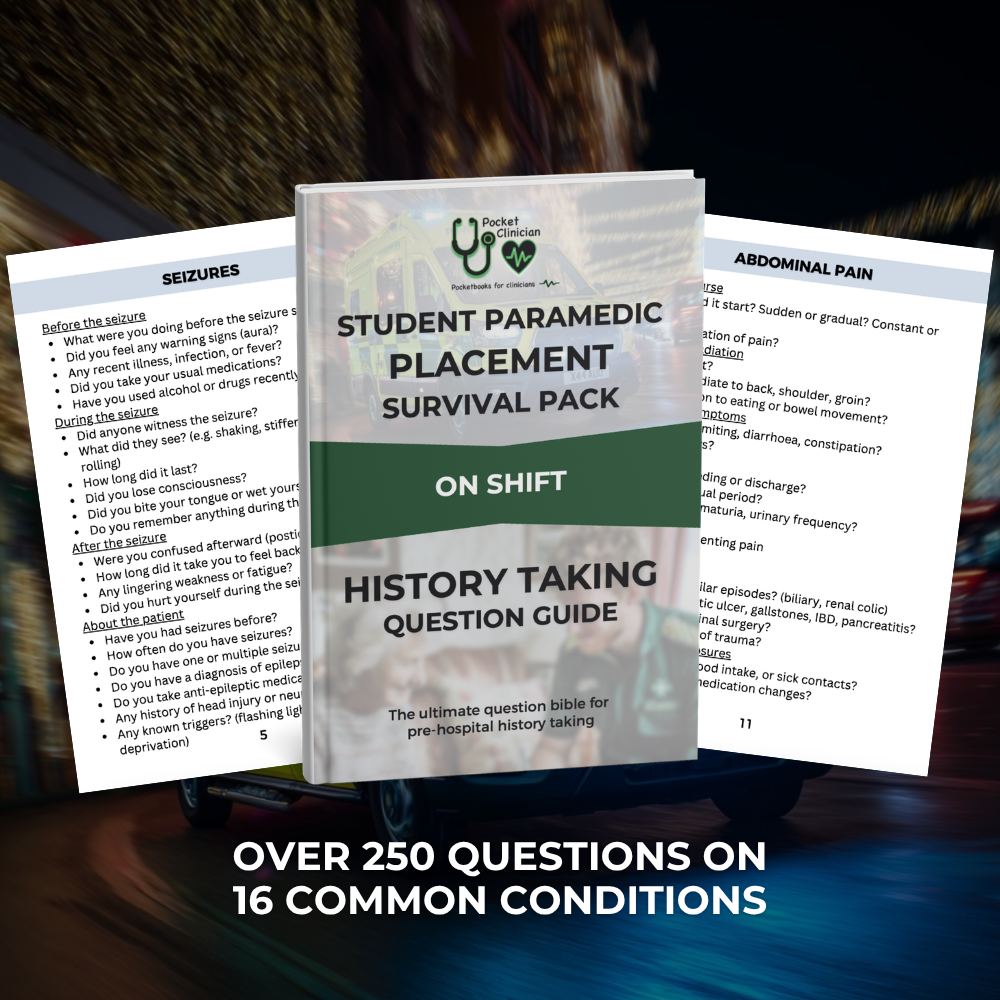
Containing over 250 targeted history taking questions across 16 common pre-hospital presentations, this guide helps you know exactly what to ask patients on shift, during OSCEs, and in real frontline ambulance scenarios.
One of the biggest challenges for student paramedics is knowing how to structure a patient history under pressure. This guide simplifies the process by giving you practical question prompts, assessment frameworks, and condition-specific history taking guidance you can quickly access on shift.
Designed for real ambulance practice, this 28-page pocket guide fits perfectly into your uniform pocket and acts as your on-shift support tool when assessing patients, improving clinical reasoning, and building differential diagnoses.
Inside the guide, you’ll find history taking questions on:
Cardiac arrest
Seizures
Headache
Dizziness
Collapse and syncope
Chest pain
Shortness of breath
Abdominal pain
Vomiting and diarrhoea
Back pain
Falls
Diabetic emergencies
Head injury
Road traffic collisions (RTC)
Mental health
Obstetric and gynaecological
Whether you’re struggling with what questions to ask, how to dig deeper into symptoms, or how to sound more clinically confident during patient handovers, this guide is designed to help you perform more like an independent clinician on placement.
Perfect for:
Student paramedics
Ambulance placement
Paramedic OSCE revision
Patient assessment practice
Pre-hospital care students
NQP development
Ambulance clinicians wanting a quick refresher
Unlike large textbooks, this guide is built for rapid reference and real-world use, helping you improve communication, patient assessment, and clinical confidence where it matters most on shift.
Improve your patient assessments and build confidence on ambulance placement with the PocketClinician History Taking Question Guide. A pocket-sized A6 booklet designed specifically for UK student paramedics and ambulance clinicians.
Containing over 250 targeted history taking questions across 16 common pre-hospital presentations, this guide helps you know exactly what to ask patients on shift, during OSCEs, and in real frontline ambulance scenarios.
One of the biggest challenges for student paramedics is knowing how to structure a patient history under pressure. This guide simplifies the process by giving you practical question prompts, assessment frameworks, and condition-specific history taking guidance you can quickly access on shift.
Designed for real ambulance practice, this 28-page pocket guide fits perfectly into your uniform pocket and acts as your on-shift support tool when assessing patients, improving clinical reasoning, and building differential diagnoses.
Inside the guide, you’ll find history taking questions on:
Cardiac arrest
Seizures
Headache
Dizziness
Collapse and syncope
Chest pain
Shortness of breath
Abdominal pain
Vomiting and diarrhoea
Back pain
Falls
Diabetic emergencies
Head injury
Road traffic collisions (RTC)
Mental health
Obstetric and gynaecological
Whether you’re struggling with what questions to ask, how to dig deeper into symptoms, or how to sound more clinically confident during patient handovers, this guide is designed to help you perform more like an independent clinician on placement.
Perfect for:
Student paramedics
Ambulance placement
Paramedic OSCE revision
Patient assessment practice
Pre-hospital care students
NQP development
Ambulance clinicians wanting a quick refresher
Unlike large textbooks, this guide is built for rapid reference and real-world use, helping you improve communication, patient assessment, and clinical confidence where it matters most on shift.